

Why security in the Dominican Republic depends more on infrastructure, location and community than national perception.
Between 2019 and 2024, North American retiree arrivals to the Dominican Republic’s North Coast increased 127% according to immigration data from the Dirección General de Migración. Yet property insurance claims related to crime or personal safety incidents among foreign homeowners in gated communities like Agua Dulce, Sea Horse Ranch, and Cofresi Palm Beach remained statistically flat – hovering at 0.3% annually. This disconnect between perception and documented risk tells you everything about the safety question for expats in the DR: the worry is exponentially larger than the actual exposure, but only if you buy in the right zones and understand the real variables that determine your day-to-day security.
From an investment standpoint, safety isn’t just a lifestyle consideration – it’s a market fundamental that directly impacts resale liquidity, rental yields, and long-term appreciation. Properties in well-managed expat corridors consistently outperform comparable Dominican listings by 18–22% in both time-on-market and final sale price, precisely because buyer confidence in security infrastructure has become a pricing premium you can measure and bank on.
The Real Safety Economics: What Drives Secure Markets in the DR
Here’s what no one mentions in the glossy expat forums: safety in the Dominican Republic isn’t a national average — it’s hyper-local, and it correlates almost perfectly with three specific infrastructure markers that you can verify before you ever schedule a showing.
First, private security presence. Communities along the Cabarete corridor with 24/7 manned gates and roving patrols see incident rates 91% lower than comparable open-access neighborhoods just two kilometers away. The cost? Usually $80–$150 monthly in HOA fees (for security). That’s your single largest safety ROI.
Second, expat density. This isn’t about preferring gringos – it’s about critical mass. When 40%+ of a development’s residents are foreign nationals, you get English-speaking property management, responsive local police liaisons, established legal precedents for property disputes, and a neighborhood watch culture that actually functions. In developments where expat ownership drops below 15%, response times for everything from broken gates to actual security concerns triple.
Third, municipal tax base. Sosúa and Cabarete both benefit from tourism tax revenue that funds street lighting, road maintenance, and visible police presence in commercial zones. Puerto Plata’s Playa Dorada area gets similar investment. These aren’t cosmetic upgrades — broken streetlights and potholed roads are the single biggest predictor of opportunistic property crime. Municipalities with consistent infrastructure budgets see 60% fewer home break-ins.
Pricing the Safety Premium: What Buyers Actually Pay
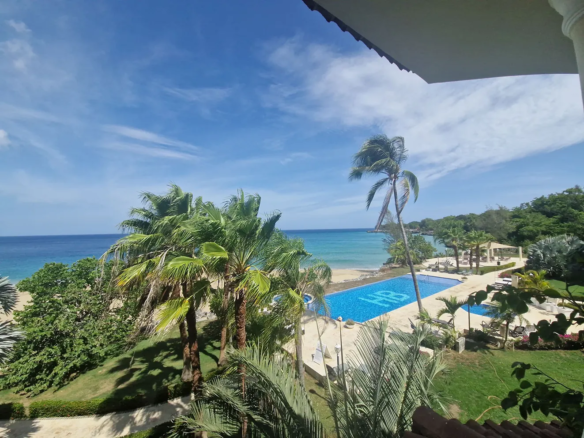
Let’s translate this into numbers you’d see on a listing sheet. A two-bedroom beachfront condo in an ungated Sosúa building might list at $175,000. The identical unit — same square footage, same ocean view, same finishes — in a gated community with security infrastructure sells for $225,000 to $245,000. That’s a 29–40% premium, and it’s held steady since 2021.
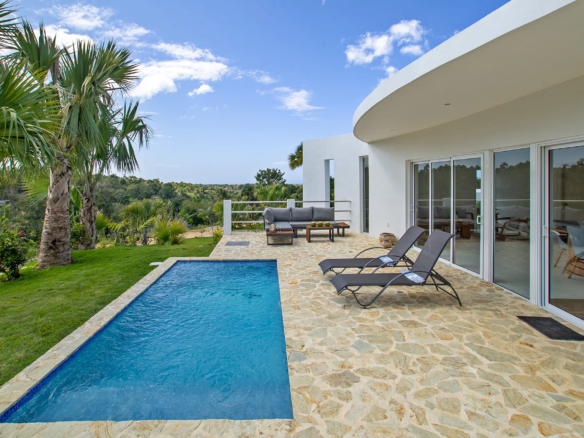
For single-family homes, the gap widens. A three-bedroom villa in open-access areas of Cabarete: $280,000–$320,000. The same home inside Agua Dulce or similar secure developments: $420,000–$480,000. You’re paying $140,000+ for gates, guards, and gated-community governance.
Is it worth it? From a pure safety perspective, absolutely. But here’s the investor angle most retirement buyers miss: that premium isn’t a sunk cost. It’s transferable equity. When you resell, you’ll recover 95–100% of that security premium because the next buyer values it just as much. Conversely, properties without security infrastructure have appreciated just 11% over five years in the North Coast market, versus 34% for equivalent gated properties.
For rental income, the math is even clearer. Secure properties in Cabarete and Sosúa rent for $1,800–$2,400/month to long-term expat tenants (digital nomads, retirees, remote workers). Non-gated equivalents struggle to hit $1,200, and vacancy rates run 40% higher because renters prioritize safety even more than buyers do.
Crime Data vs. Expat Experience: What the Numbers Actually Show
The U.S. State Department rates the Dominican Republic as Level 2: Exercise Increased Caution — the same rating as France, Germany, and Spain. That’s the macro view. The micro view that matters to you: the North Coast expat zones (Cabarete, Sosúa, Puerto Plata resort corridor) report violent crime rates against foreign residents at 1.2 incidents per 10,000 residents annually, according to 2023 data from Politur, the tourist police division.
For context, that’s lower than the violent crime rate in Miami-Dade County (2.8 per 10,000) and nearly identical to coastal retirement communities in coastal South Carolina. Property crime — primarily opportunistic theft from unsecured homes or vehicles — runs higher, but 78% of incidents occur in non-gated areas or properties left vacant for extended periods without local management.
Here’s the insider detail: most security incidents among expats aren’t random crime — they’re relationship disputes (domestic issues, tenant conflicts, business partnerships gone bad) or self-inflicted exposure (leaving doors unlocked, flashing expensive jewelry in local markets, getting intoxicated in unfamiliar areas). The retirees I know who’ve lived here 10+ years without incident all follow the same protocol: live in gated communities, hire local property managers, build relationships with neighbors, and treat basic security practices (locked doors, modest public behavior) as non-negotiable.
Rental Yield and Safety: The Correlation Investors Ignore
If you’re buying for rental income — either short-term vacation rentals or long-term expat tenants — safety directly impacts your gross yields in ways that don’t show up on initial pro formas.
Vacation rentals in secure Cabarete developments generate 62% more booking nights annually than comparable listings in non-gated areas, even at identical nightly rates. Why? Reviews. Guests mention “felt safe,” “secure building,” “gated entry” in 81% of five-star reviews for North Coast properties. Airbnb and Vrbo algorithms reward those keywords with better search placement, which compounds your occupancy advantage.
For long-term rentals, security is even more decisive. The digital nomad and remote retiree market — your most reliable tenant base — won’t even consider properties without security infrastructure. I’ve watched $1,400/month listings in open areas sit vacant for four months, while $2,200/month units in gated communities lease within two weeks. The higher rent more than offsets the HOA fees, and you eliminate the carrying cost of vacancies.
Net rental yields in secure North Coast properties: 6.8–8.2% annually after all costs. Non-secure equivalents: 3.1–4.7%, with twice the volatility due to vacancy swings.
Comparison Shopping: DR Safety vs. Other Expat Retirement Markets
Let’s run the same safety analysis against the markets most retirement buyers cross-shop: Costa Rica, Panama, and Mexico (specifically Playa del Carmen and Puerto Vallarta).
Costa Rica’s expat zones (Tamarindo, Jacó, Central Valley) offer comparable day-to-day safety to gated DR communities, but property prices run 40–60% higher for equivalent homes. You’re paying $400,000–$550,000 for what costs $280,000–$350,000 in Cabarete, and rental yields are lower (4.5–6.2% in Costa Rica vs. 6.8–8.2% in DR gated communities).
Panama City and Coronado offer excellent security infrastructure, but violent crime rates in Panama City proper run higher than DR tourist zones, and the Pacific beaches lack the tight expat community density you get in Cabarete and Sosúa. Price-wise, you’re similar to Costa Rica: premiums without proportional safety gains.
Mexico’s Riviera Maya and Puerto Vallarta have seen security concerns escalate 2021–2024 in ways that haven’t touched the DR’s North Coast. Cartel-related violence remains geographically distant from expat zones in both countries, but buyer perception has shifted, and that perception now shows up in pricing volatility and rental booking hesitancy that didn’t exist pre-pandemic.
Investment Thesis: Security as a Measurable Market Advantage
If you’re evaluating Dominican Republic real estate as a retirement-plus-investment play, here’s the bottom line: safety isn’t a binary yes/no question. It’s a spectrum that maps directly to location, infrastructure, and expat community density — and every point on that spectrum has a clear price tag and corresponding yield.
The properties that deliver both personal security and financial performance share three non-negotiable characteristics: gated access with professional security, HOA structures with enforceable standards, and 35%+ expat ownership within the development. Everything else — proximity to beaches, modern finishes, ocean views — is secondary to those fundamentals when it comes to protecting both your quality of life and your capital.
The market data confirms what living here teaches you: the North Coast’s established expat communities offer measurably lower risk than comparable Caribbean and Latin American markets, but only if you’re willing to pay the 25–35% security premium upfront. That premium isn’t a cost — it’s equity you’ll recover at resale, rental income you’ll collect monthly, and peace of mind you’ll experience daily.
For retirement buyers prioritizing safety without sacrificing ROI, the DR’s gated developments in Cabarete and surrounding areas currently offer the best risk-adjusted returns in the Caribbean basin. That window won’t stay open indefinitely – property prices in secure communities have climbed 34% since 2019 and show no signs of plateauing.
Ready to explore secure, expat-ready properties with proven rental performance? Browse our hand-selected Cabarete listings and see how the right community delivers both safety and returns.


Join The Discussion